Back it Up Buttercup!
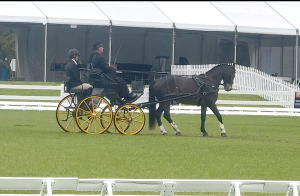 Do you ever struggle with getting your horse to give you a good reinback while hitched to the carriage?
If you do, you’re not alone. The reinback can be a frustrating move for both the driver and the horse. Sometimes it feels like there’s nothing in heaven or on earth that will convince your horse to move that carriage backwards. But when we think about what we’re asking the horse to do, it sort of makes sense that they are hesitant to go along with us on this one.
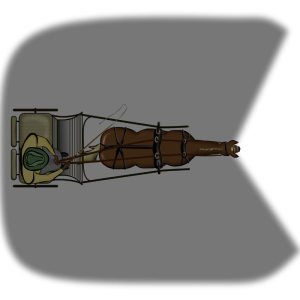 First and foremost, most of us drive our horse with blinders on. So the horse has no clue where or what he’s backing into. Even the horses in open bridles like Loretta can’t really see clearly that the way behind them is safe, so they have to go on our word that they’ll be ok.
Secondly, walking backwards is just kind of a weird thing for a horse to do. They are way better and more efficient at going forward or sideways. In fact, they figured out 90% of those movements without our help. But horses don’t really have much of a habit of backing up while they are just out being horses.
When we add harness and a carriage to the mix, they are being asked to push a carriage away from them in a mode of movement that they really aren’t naturally comfortable in.
The good news is that there’s a really simple exercise that can help your horse back up confidently. This isn’t just for the greenies. Your seasoned competitive horse who only backs up when he feels like it (then goes all crooked) will get a lot out of this too.
A Good Reinback Starts in the Barn
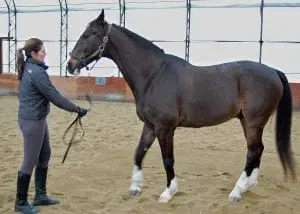
The real place to start teaching your horse a great reinback is at the barn without tack. This is where you can familiarize your horse with coordination for backing up. You may be surprised how challenging this can be.
Most horses will put up some resistance to this exercise at first. Be patient, and go just a few steps at a time. Use whatever physical, visual, and verbal cues you need to get your horse to take a step or two back.
Treat 1-3 steps of backing as a success, and make a big deal of it when you’ve gotten that far. Give your horse lots of praise, treats, whatever it takes to make him feel good, then leave the subject.
When you return to the exercise the next time, try to get one or two more steps than the previous. Again, make him feel like a hero for every bit of success you have. As your horse progresses, try to reduce the cues down to just a verbal “back”, and a light tug on the halter.
Guiding Him Back
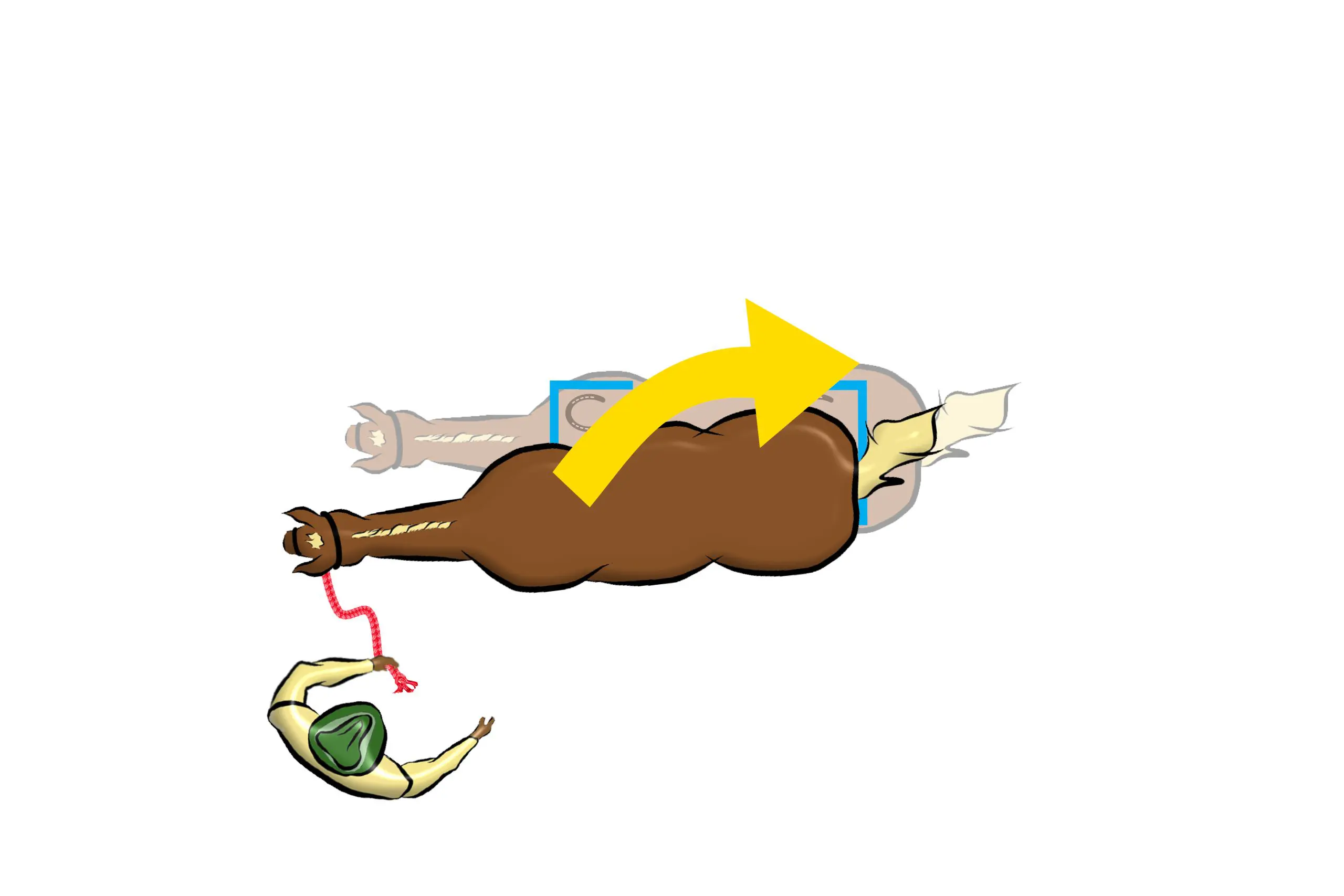 When you start getting beyond a few steps, you’ll notice that your horse will seldom take those steps straight back. That’s normal, but this is also a great opportunity to show him how
to back straight.
The first step is the most critical one. They usually take that step back and away from where you’re standing. Position yourself directly in front of your horse when you ask him to back. As he steps back, step with him in the direction he’s stepping. So if he steps back and to the left, you follow back and to the left, but step toward the shoulder or his barrel to “block” the energy in that direction.
As you keep returning to the exercise, you’ll most likely find that it takes smaller cues and less body language to get your horse to back up. In fact you may not have to step past his head to help guide him back in a straight line.
Introducing Tack
You’ll have to gauge your horse’s vibe to decide when to start doing this exercise in tack. You’ll want to wait until he is relaxed and confident when you ask him to back without his work clothes on.
When it’s time to introduce the harness into the game, make it a small change. Put on the full harness, but leave off the bridle and reins for now. Just get him confident that he can still back up with all his gear on. Use the same body language and verbal cue you’ve used all along.
Finally, when he’s really good at that, you can put on the bridle & reins, but don’t change how you ask him to back up. You can give a light tug on the reins at the bridle the way you did on the halter, but stay where he can see you so you can guide him back.
Also, don’t be surprised if he’s a little hesitant to back up the way he did without the bridle. He may also be a little hypersensitive to touches at his side at this point. It’s scary backing up blind! Again, be patient. If you’ve noticed an increased stress level, keep the sessions short. One or two asks per session, then move on to other stuff your horse is already good at.
Translating Into the Reins
You might need a helper for this step because it’s really hard to activate the reins from behind your horse while you stand in front of him. It can be done with long lines, but it takes a lot of practice and usually leads to confusion because he feels you pulling the harness forward each time you tug on the reins.
It’s easier to have a helper hold the reins, standing behind and a little off to the side of your horse where they’re out of the way. You stay up front where you normally do. Since he’s used to you showing him how to back up, keep doing your part the same way. Ask your helper to activate the reins with two light tugs (like a half-halt) then a mild draw.
At the same time you can give the verbal cue to back up, and if he needs it, use your body language to show him what you want. Your horse might not connect the helper’s rein aids with the halter tug he learned earlier. Bridge that gap by taking the reins at the bridle yourself and giving the same light tug, so he understands the pressure from behind means back up.
Make sure your helper understands that it’s not their job to pull your horse backwards. They are just there to give the rein cue. The moment your horse steps back they should release the rein aid until you want him to take another step back.
How Long Will This Take?
That really depends on your horse. Some horses are going to pick this stuff up pretty quickly. Maybe you’ll go from backing up without tack to backing in harness in just a few sessions. Other horses are really going to require you to break it down one step at a time. That may mean it will take many more micro sessions on the subject.
It’s worth taking your time and giving your horse as many sessions as he needs. And keep these short. Ten or fifteen minutes is plenty. You’re better off doing a little, often, than drilling it. Even if you have an experienced horse, doing these little back up sessions in the barn can help him develop better coordination in the carriage.
With a little time on the ground, that frustrating reinback can turn into one you can count on. Straight, square, and there when you ask for it.
Want to learn more?